

Planning Multi Day Sailing Charters: A Step-by-Step Guide
Ready to plan a multi-day sailing charter?
Follow That Dream Sailing offers crewed catamaran cruises from Fernandina Beach with a licensed captain.
Table of Contents
What a Multi-Day Sailing Charter Involves
A multi-day sailing charter is a trip of two or more nights on a boat you rent, with the sailing, anchorages and daily plans built around you rather than a fixed tour schedule. Follow That Dream Sailing offers multi-day charters aboard its 41-foot Lagoon 410 S2 catamaran, and the planning steps below reflect how a charter like that generally unfolds on the water.
Most trips follow a similar rhythm. You board, learn the boat, sail to the first anchorage in the afternoon, swim or explore ashore, and wake up somewhere new. Daily sailing distance is usually the main variable, and it should be set by how much time your group wants on the water versus at anchor.
Before you book, settle four questions: how many nights, how many guests, what level of sailing experience your group has, and whether you want to skipper the boat yourself. Those answers decide almost every other choice, from boat size to cost.
Choosing Between Bareboat and Crewed Charters
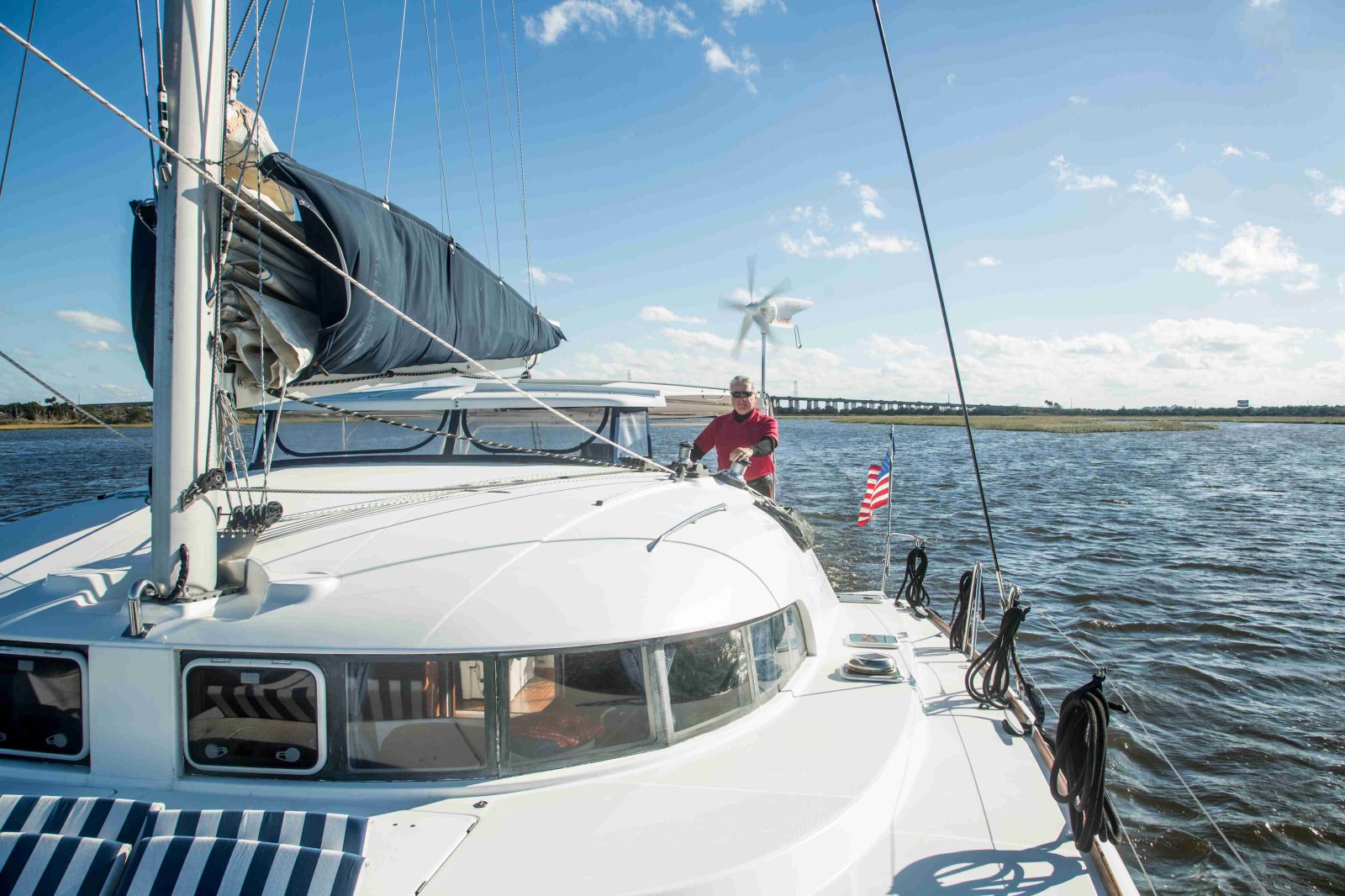
Bareboat charters mean you rent the boat without a captain, and you or someone in your party must hold the required certification to skipper it. Crewed charters include a professional captain and crew, so you can focus on the trip rather than navigation and docking. You can see the specific boat and what it offers on board on our CATAMARAN page.
A crewed charter suits guests with no sailing background, anniversary and celebration trips, and groups who want to relax. At Follow That Dream Sailing, our captain and crew handle the sailing while you relax on board.
Bareboat suits experienced sailors who want full control and have the certifications to back it up.
3 Day Yacht Charter Cost: What Drives the Price
Pricing for a multi-day charter depends on quantity, dates, and inclusions, so the most useful planning move is to ask for a written, line-item quote so you can compare two charters on the same basis.
The main variables that move a three-day price:
Boat size and type. A 41-foot catamaran carries more guests and more living space than a smaller monohull, and pricing reflects the boat you choose.
Season and dates. Peak season and holiday weekends command higher rates, and popular departure windows book out months ahead. Shifting a trip by a week or two on either side of a holiday can change the total meaningfully.
Number of nights and guests. The number of nights and guests in your party affects the total, so ask how your dates and group size are priced.
Crewed versus bareboat. Choosing a crewed or bareboat charter changes which costs are included in the total, so confirm this when requesting a quote.
Inclusions. Check what each quote covers, since an all-inclusive quote and a base rate may include different items.
Building a Realistic Total-Cost Estimate
Rather than anchoring on the headline number, build a full estimate in layers that cover the charter fee, any crew costs, provisioning, fuel and marina dockage, taxes and fees, gratuity, and a contingency buffer for weather changes or an extra night at a marina. Confirm each layer with your operator when requesting a quote.
Ask your operator to confirm, in writing, which costs are included in your quote and which are billed separately, including items such as provisioning, fuel, dockage, gratuity, deposits, shore excursions, and cancellation or weather-change policies.
For current rates and package options, see our CRUISE PRICING page. Our 3-HOUR SUNSET CRUISE is a shorter option if you want a feel for the boat and the coastline before committing to multiple days.
Sailing Charter Itinerary Planning, Step by Step
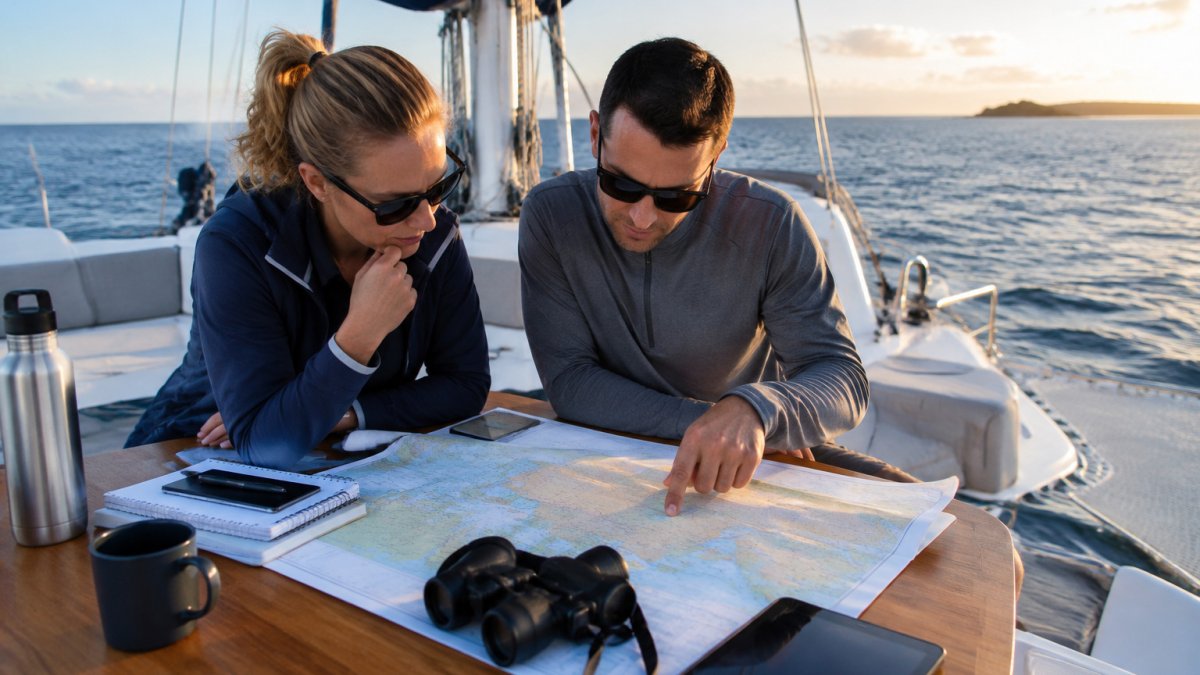
A workable itinerary balances sailing time, anchorage choice and downtime, and it is built in two passes: a planning pass before you book, and a flexibility pass once you are on the water. The planning pass sets the skeleton. The flexibility pass is what keeps a good trip from turning into a stressful one when the wind does not cooperate.
The planning pass:
Set your start and end points, and confirm the marina or departure location. Round-trip and one-way itineraries price and plan differently.
Decide how many nights you want and how many hours you are willing to spend underway each day. This is the single biggest constraint on the route.
Pick anchorages with sheltered water and a reasonable distance from the previous stop. Note which ones offer a dinghy landing, a beach, or a marina with fuel and water.
Build in a buffer day for weather, since wind and tide can change plans. A three-night trip with one buffer day is more relaxed than a three-night trip with none.
Share the draft with your captain or charter company and adjust for practical constraints like tides, bridge openings and fuel range.
Finalize the plan and make a copy for each adult in your group, including the captain's contact and the marina phone numbers.
Many first-time planners overpack the schedule. Leave open time at anchor so the trip does not feel like a commute between destinations.
How Far to Sail Each Day
For most guests, a daily run of roughly 15 to 30 nautical miles, with four to six hours underway, feels full without being exhausting. Groups with children or first-time sailors often do better with shorter legs and earlier anchorage arrivals. Experienced groups who enjoy long passages can go farther, but plan for the wind and sea state, not just the distance on the chart. A 25-mile leg into 15 knots on the nose takes far longer than the same leg with a following breeze, and the difference matters when you are trying to reach an anchorage before dark.
Contingency Planning and Itinerary Flexibility
The strongest itineraries are the ones with a built-in plan B. Before departure, agree on three things with your group and your captain: who has final say on route changes, what the group's tolerance is for a wet or windy day, and which anchorages are acceptable substitutes if the primary stop is untenable. Write the substitutes down. A captain who knows the group has already agreed to a backup plan can make a weather call early, while there is still daylight and sea room, rather than pressing on toward an anchorage that will be uncomfortable overnight.
The most common disruptions are weather, seasickness, and mechanical issues. For weather, plan the longest legs for the morning when conditions are usually calmest, and keep one anchorage in reserve within a short sail of each overnight stop. For seasickness, identify the least-motion spot on the boat in advance and keep medication on hand before anyone feels unwell. For mechanical issues, confirm before departure what the operator's support arrangement is, whether there is a chase boat, a mechanic on call, or a defined procedure for returning to the dock, so a problem does not turn into a debate at sea.
Watch out: a group that has not agreed on decision-making before departure often ends up debating route changes in the middle of one. Settle the authority question on land, not on the water.
The article breaks daily sailing into a few concrete ranges that are worth comparing at a glance.
Factor | Guidance | Why it matters |
Daily sailing distance | 15 to 30 nautical miles | Sets how full the day feels |
Time underway | 4 to 6 hours | Leaves room for anchorage downtime |
Buffer days | One per three nights | Absorbs weather changes |
Longest legs | Morning | Conditions are usually calmest then |
Route decision authority | Agreed before departure | Avoids debate at sea |
Weather, Wind and Safety Checks Before You Leave
Check the forecast for wind speed and direction, wave height and any storm systems for the full trip window, not just the departure day. Wind direction determines which anchorages are comfortable, so the forecast should shape your route as much as your preferences do.
Before leaving the dock, confirm that the crew has walked the boat through safety equipment, including life jackets, fire extinguishers, the location of the first aid kit and the VHF radio. Ask where the emergency procedures are posted and what the plan is if someone goes overboard. A reputable charter company will cover this as a matter of routine.
Watch out: do not treat a clear morning forecast as a guarantee for the afternoon. Afternoon squalls can build quickly along the coast, so plan your longest legs for the morning when conditions are usually calmest.
What to Pack for a Sailing Trip
Pack for sun, wind and wet decks. A soft-sided duffel is easier to stow in a catamaran cabin than a rigid suitcase. Bring:

Reef-safe sunscreen, a wide-brim hat and sunglasses with a strap
Light layers and a windproof jacket for evenings on deck
Non-marking, closed-toe deck shoes with good grip
Swimwear, a quick-dry towel and a dry bag for phones and documents
Motion-sickness medication if you use it, plus any personal prescriptions
A reusable water bottle and any dietary items not covered by provisioning
Leave hard-soled shoes and heavy luggage at home. Space in the cabins is limited, and keeping bags soft and compact makes life easier for everyone.
How to Avoid Seasickness on a Sailing Boat
Catamarans are generally considered stable, and the brand describes its boat as offering a stable and comfortable ride. Even so, some guests may feel queasy, especially in choppy water or when they go below deck.
Stay on deck where you can see the horizon, sit near the middle of the boat where motion is least pronounced, and eat light meals before and during the sail. Avoid reading or looking down at a screen while underway. If you are prone to seasickness, take any medication before you board rather than waiting until you feel unwell, since preventive dosing works far better than treating symptoms afterward.
Tell your captain early if you start to feel unwell, so the crew can respond.
Booking Your Multi-Day Charter With Follow That Dream Sailing
Booking a multi-day charter starts with choosing your dates, group size and whether you want a crewed trip. Once you have a rough plan, reach out to confirm availability, ask for an itemized quote and check the inclusions list against your own needs.
Our CREW team includes a highly experienced captain and crew, so you can see who will be on board before you commit. For questions about policies, cancellations and logistics, our FAQ covers the common ones, and you are welcome to call or email for anything not addressed there.
Get in touch to plan your multi-day sailing charter and start building the itinerary that fits your group.
Frequently Asked Questions
How do you plan a multi-day sailing charter?
Start by choosing the charter length, group size and whether you want a bareboat or crewed trip. Then book a boat several months ahead for peak seasons, decide on a rough route with daily sailing distances that suit your group, and confirm what the charter includes. Build in flexible stops so weather or wind changes do not wreck the plan. Reviewing the charter contract before you pay is essential.
What should you pack for an overnight sailing trip?
Pack soft-soled deck shoes, layered clothing for wind and sun, a light waterproof jacket, swimwear, sunscreen, sunglasses, a hat with a strap, a refillable water bottle and any personal medications. Bring a small dry bag for phones and documents. Keep luggage soft and compact, since cabin storage on a sailboat is limited. Check whether linens and towels are provided before you pack your own.
How much does a 3-day yacht charter cost?
A 3-day yacht charter cost depends on the boat size, the season, the charter type and the departure port. Ask for a written quote that lists fuel, provisioning, cleaning, taxes and any security deposit, because these extras can add meaningfully to the base rate. Follow That Dream Sailing lists current pricing on its website, and you can request a quote directly.
What is included in an all-inclusive sailing charter?
An all-inclusive sailing charter typically covers the boat, a skipper or crew, fuel, meals and drinks, and basic onboard amenities. Terms vary by operator, so confirm exactly what is covered. Items such as alcohol upgrades, shore excursions, marina fees and gratuities are often separate. A clear written inclusions list helps you compare offers accurately.
How many hours a day do you sail on a multi-day charter?
Most guests plan roughly three to five hours of sailing per day, which leaves time for swimming, anchoring and shore visits. Longer passages are possible, but they reduce time at your destinations and can be tiring for passengers prone to seasickness. Shorter sailing days with a relaxed schedule usually suit families and first-time sailors best.
How can you avoid seasickness on a sailing boat?
Stay on deck and watch the horizon, sit near the middle of the boat where motion is least, and eat light meals before and during the sail. Avoid strong smells and reading while the boat is moving. Discuss medication options with your doctor before the trip, since some remedies work best when taken before you feel unwell. A catamaran's wider hull generally reduces side-to-side rolling compared with a monohull.
What should first-time guests know before a multi-day sailing trip?
First-time guests do not need prior sailing experience on a crewed charter, but it helps to understand basic boat etiquette, how to move safely on deck, and how the cabins and head work. Ask the operator about safety briefings, life jackets and emergency procedures. Plan for weather delays and be ready to adjust your route. Clear communication with your captain makes the trip more comfortable.
Comments